

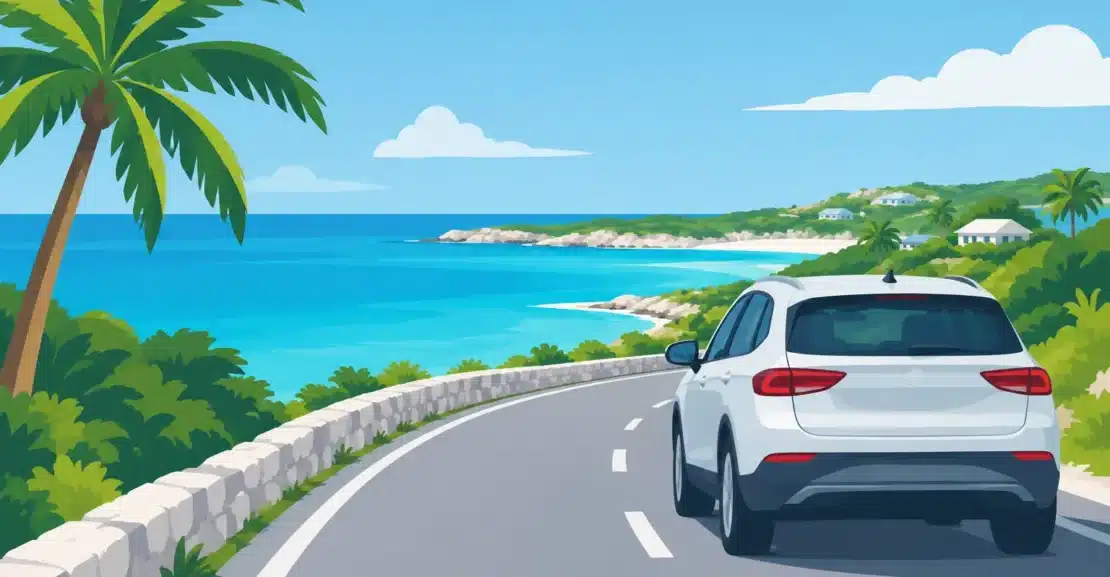
The first few minutes after leaving Providenciales International Airport can feel different for even confident US drivers. To prepare for left-side driving in Turks and Caicos, focus on one simple habit before you pull away: stay left. Once that becomes automatic, the island opens up – from Grace Bay restaurants and Long Bay beaches to quiet coastal roads, villa neighborhoods, and local spots beyond the resort area.
Driving on the left is not difficult, but it does require your full attention at first. A little preparation lets you skip the stress, bypass the long airport-counter process, and start your vacation with the freedom to go where you want, when you want.
What Left-Side Driving Means in Providenciales
In Turks and Caicos, traffic travels on the left side of the road. Many rental vehicles are left-hand drive, just like the cars most US visitors use at home. That means the steering wheel is still on the left, but your position on the road changes. For some drivers, that combination takes a few extra minutes to process.
The key is to use the centerline as your reference point. The centerline should be on your right, while the curb, shoulder, parked cars, or roadside should be on your left. If you find yourself near the middle of the road when there is no traffic around, pause and reset before continuing.
The adjustment is usually quickest when you avoid rushing. You have arrived in the islands – there is no reason to drive like you are trying to make a connection at home. Give yourself a calm first drive, keep distractions low, and allow the local pace to work in your favor.
Roundabouts Are the Moment to Slow Down
Roundabouts are common around Providenciales, especially on routes connecting the airport, Grace Bay, Leeward, Long Bay, and other popular areas. They keep traffic moving, but they are also where visitors are most likely to second-guess themselves.
On a roundabout in Turks and Caicos, enter to the left and travel clockwise. Yield to traffic already circulating in the roundabout, which will approach from your right. Signal as you leave, watch for vehicles changing position, and do not assume another driver will exit where you expect.
Your first roundabout does not need to be perfect. If you miss your exit, simply continue around again rather than making a sudden lane move. That small bit of patience is safer than trying to correct at the last second.
A quick roundabout routine
Before entering, reduce speed and look right for circulating traffic. When the way is clear, enter left, keep a steady pace, and take your exit when it is safe. Say it out loud if it helps: “Look right, enter left.” It may sound simple, but it gives your brain a reliable cue while the new driving pattern becomes familiar.
Turns Need Extra Attention
Right turns and left turns are reversed from what many US visitors expect. A left turn is generally the easier move because you are turning toward the side of the road where you are already traveling. A right turn crosses the opposing lane, so it deserves more care.
At intersections, do not rely only on muscle memory. Stop, look in both directions, and take an extra beat before turning. Visitors occasionally make a correct turn from the wrong road position simply because they followed an old habit from home.
When you pull out of a resort, restaurant, beach access point, or villa driveway, repeat the same reminder: left lane. This is particularly useful after a long beach day, when you may be relaxed, sun-tired, or focused on getting everyone back to the hotel.
Make Your First Drive an Easy One
Your first drive should be practical, not ambitious. If possible, head directly to your accommodation, get settled, and make your first grocery or dinner trip before exploring every corner of the island. Daylight makes it much easier to read road layouts, see pedestrians and cyclists, and get comfortable with lane placement.
Providenciales roads can vary. Major routes are generally straightforward, while smaller roads near villas, beaches, and less-developed areas may be narrower, darker at night, or have limited shoulders. Drive at a pace that gives you time to react, especially after rain or when approaching a blind curve.
GPS is useful for finding restaurants, resorts, and beaches, but it should not replace your judgment. Keep an eye on road signs, lane markings, parked vehicles, and local traffic. If a navigation prompt feels confusing at a roundabout, prioritize safe driving first and reroute afterward.
Share the Road Like a Visitor Who Knows Better
A rental car gives you the flexibility to discover more of Turks and Caicos, but island roads are shared by more than vacation traffic. You may encounter pedestrians, runners, cyclists, scooters, golf carts, service vehicles, and drivers entering from side roads.
At night, visibility can change quickly outside the busiest visitor areas. Keep your headlights on when needed, avoid distractions, and leave extra room around people walking or biking along the road. Do not assume every roadside area has a wide sidewalk or a marked bike lane.
Parking also deserves a moment of thought. In busy areas near Grace Bay, restaurants, and popular beach accesses, park only where it is clearly permitted and avoid blocking entrances, driveways, or traffic flow. A few minutes of patience is better than creating a problem during an otherwise easy day out.
Choose a Vehicle That Supports a Comfortable Drive
The right vehicle can make your adjustment period much easier. A compact car is a smart fit for couples who plan to stay close to Grace Bay and want simple parking. Families with luggage, child seats, beach gear, or villa supplies may appreciate the added space of a midsize vehicle or SUV.
If your itinerary includes frequent drives between the airport, grocery stores, beaches, restaurants, and different parts of Providenciales, choose comfort over squeezing into the smallest option. A vehicle with room for everyone makes the ride calmer, and a calm driver adapts more easily to left-side traffic.
At My My Auto Rentals, the goal is to make that first drive feel easier from the start. Fast airport pickup, clean low-mileage vehicles, clear pricing, and local support mean you can spend less time figuring out rental logistics and more time getting oriented on the island.
Your Pre-Drive Check Before Leaving PLS
Before you leave the pickup area, take two minutes to get familiar with the vehicle. Adjust your seat and mirrors, locate the turn signals and wipers, set your phone navigation before moving, and make sure everyone has their seat belt on. If you are traveling with children, confirm that child seats are correctly secured before the car starts rolling.
It also helps to choose one person as the navigator. Their job is not just to read directions, but to give a calm reminder before turns and roundabouts: “Keep left,” “roundabout ahead,” or “your exit is coming up.” This is especially helpful for families arriving after a long travel day.
Small Habits That Make Left-Side Driving Feel Natural
The adjustment is less about memorizing rules and more about building repetition. Keep your drive focused for the first day or two, particularly when leaving a parking space or turning onto an empty road. Empty roads are when drivers are most likely to drift back toward their usual US lane position.
Use these four habits throughout your stay:
- Keep the road centerline on your right.
- Look right first before entering a roundabout.
- Slow down before every turn until the pattern feels familiar.
- Let a missed turn go and safely reroute instead of reacting suddenly.
Most visitors find that left-side driving begins to feel comfortable far sooner than expected. The first few intersections require concentration; by the next day, the routine often feels natural. Start slow, stay left, and give yourself enough time to enjoy the drive as much as the destination.