

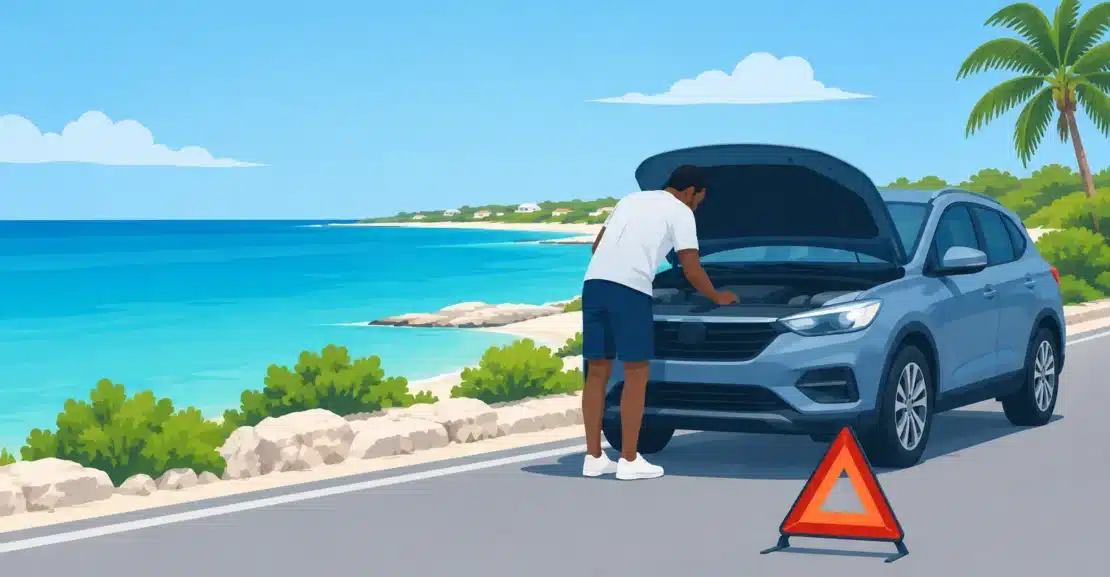
A flat tire after a beach day, a warning light on a quiet road, or a wrong turn after sunset should not take over your vacation. This roadside emergencies guide is built for visitors driving in Turks and Caicos, where calm decisions and fast local support make all the difference. You came to enjoy Grace Bay, Long Bay, and the freedom to explore Providenciales on your own schedule. A little preparation keeps an unexpected stop from becoming a stressful one.
Start Safe Before You Solve the Problem
If something feels wrong with the vehicle, your first job is not to diagnose it. It is to get everyone out of harm’s way. Slow down smoothly, turn on your hazard lights, and look for a safe place to pull completely off the travel lane. Avoid stopping around blind corners, narrow shoulders, or busy roundabouts whenever possible.
Turks and Caicos drives on the left side of the road, which can feel unfamiliar for US visitors during the first day or two. Roundabouts also require extra attention. If you have a tire issue, overheating concern, or mechanical warning, do not try to push through traffic to reach your hotel. Pull over at the first safe location, take a breath, and keep passengers inside the vehicle unless staying in the vehicle creates a greater risk.
At night, choose a well-lit area when you can. Keep doors locked while you arrange help, especially if you are on an isolated road. There is no need to accept help from a stranger before you have contacted your rental provider and understand the next step.
Your Roadside Emergencies Guide: What to Do First
Most situations fall into a few common categories. The right response depends on what happened, but the order stays the same: secure the vehicle, protect your group, then contact the people who can help.
Flat tire or tire damage
A tire can be damaged by road debris, a pothole, or a sharp object near a parking area. If the steering wheel pulls, the vehicle begins to vibrate, or you hear a repeating thump, reduce speed gradually. Do not brake hard or make sudden turns.
Once safely parked, inspect the tire from a safe distance. You do not need to remove the wheel or attempt a repair on a vacation day. Take a clear photo of the tire and your surroundings, then contact your rental company. Let them know your location, the vehicle description, and whether the car is safely parked. Local support can advise whether assistance can reach you or whether a replacement vehicle is the better option.
Dead battery or a vehicle that will not start
A vehicle that will not start may have a battery issue, a key-related issue, or another mechanical concern. Check the obvious items first: make sure the vehicle is in park, the parking brake is properly set, and all lights and accessories are switched off. If it still will not start, do not repeatedly crank the engine. That can drain the battery further.
Call your rental provider with your exact location. Resort parking lots, villa driveways, grocery stores, and beach access points can be hard to find without details, so include the property name, nearby landmark, or a map pin if you can share one. This is where local, responsive service matters more than a generic call center.
Warning lights, overheating, or strange noises
A warning light is not always an emergency, but it should never be ignored. If a red oil, temperature, or brake warning appears, pull over as soon as it is safe. If steam is coming from under the hood or the temperature gauge is high, turn off the engine and do not open the radiator cap. Hot coolant can cause serious burns.
For a yellow or amber warning light, contact the rental team before continuing. They can tell you whether the vehicle should remain parked or whether it is safe to travel a short distance for inspection. Avoid guessing, especially when you are headed away from the main resort areas.
Minor accident or vehicle damage
Even a low-speed parking lot bump deserves a calm, documented response. First, check whether anyone is injured. If there is an injury, immediate danger, or major collision, contact local emergency services right away. Then notify your rental provider as soon as possible.
For minor damage, take photos of the vehicles, license plates, the surrounding area, and any visible damage. Exchange necessary information with the other driver, but do not argue about fault at the roadside. Your rental company can explain what documentation is needed and help you move forward without unnecessary confusion.
Lost, locked out, or unsure where you are
Getting turned around is easy when you are exploring a new island after dark. Do not keep driving while distracted or frustrated. Pull into a safe, open location such as a gas station, hotel entrance, or established business parking area, then call for directions or assistance.
If you are locked out, do not force a door, window, or trunk. That can turn a simple access problem into costly vehicle damage. Contact the rental company with your location and vehicle details instead.
What to Keep in the Car
You do not need to pack for every imaginable scenario, but a few basics make a roadside delay more comfortable. Keep your phone charged before leaving the resort, and bring a charging cable or portable battery for longer beach days. Carry water, especially when traveling with children, and keep sunscreen handy if you may be waiting outdoors.
Have your rental paperwork available on your phone or in the glove compartment. It should make it easier to provide the vehicle information your support team needs. It also helps to save your rental provider’s phone number before you leave the airport or resort. Wi-Fi may be available at many properties, but you should not depend on it when you are out exploring.
For families, child seats should remain correctly installed throughout the trip. If you need to move luggage or reconfigure seating after a roadside issue, make sure children stay safely supervised and away from moving traffic.
Prevent Problems Before You Head Out
The easiest roadside emergency is the one you avoid. Before each drive, take a quick walk around the vehicle. Look for a visibly low tire, new damage, or anything left behind in the path of the car. Set your mirrors and seat before moving, and become comfortable with the turn signals, headlights, wipers, and hazard-light button.
Plan your route before leaving the hotel or villa. Providenciales is easy to enjoy by car, but some beach access roads and less-developed areas may be narrower, darker, or rougher than visitors expect. A compact car is ideal for couples traveling light, while an SUV or family vehicle can offer more space for beach gear, kids, and luggage. The best choice depends on where you plan to stay and how much of the island you want to see.
Use extra care after rain. Roads can become slick, visibility can change quickly, and puddles can hide uneven surfaces. Slow down rather than trying to keep up with traffic. Vacation driving should feel relaxed, not rushed.
Why Local Support Changes the Experience
When you rent a car in Turks and Caicos, roadside help should feel personal. You should not be left navigating a complicated chain of menus while standing in a parking lot with tired kids and melting groceries. Clear instructions, a real local contact, and a practical next step turn a disruption into a manageable pause.
My My Auto Rentals provides 24/7 local support because a vacation does not run on office hours. Whether you need help near PLS airport, Grace Bay, downtown Providenciales, or a private villa, reporting the issue quickly gives the team the best chance to respond efficiently. Honest details help too. Say what you see, where you are, and whether the vehicle is blocking traffic or safely parked.
A roadside issue does not have to ruin an island day. Keep your phone charged, drive with patience, and ask for help early. Then, once the situation is handled, get back to the part of Providenciales you came for: an easy drive, a beautiful view, and more time to enjoy the island.